
A toothache is one thing. A tooth infection is something else entirely. The problem is that most tooth infections start as a toothache, and by the time people realise it is more than that, the infection has been building for days.
If you are in Edinburgh and wondering whether the pain in your tooth is just a cavity or something more serious, this guide explains the warning signs of a tooth infection, what happens if you ignore it, and what a dentist can actually do about it.
What Does a Tooth Infection Feel Like?
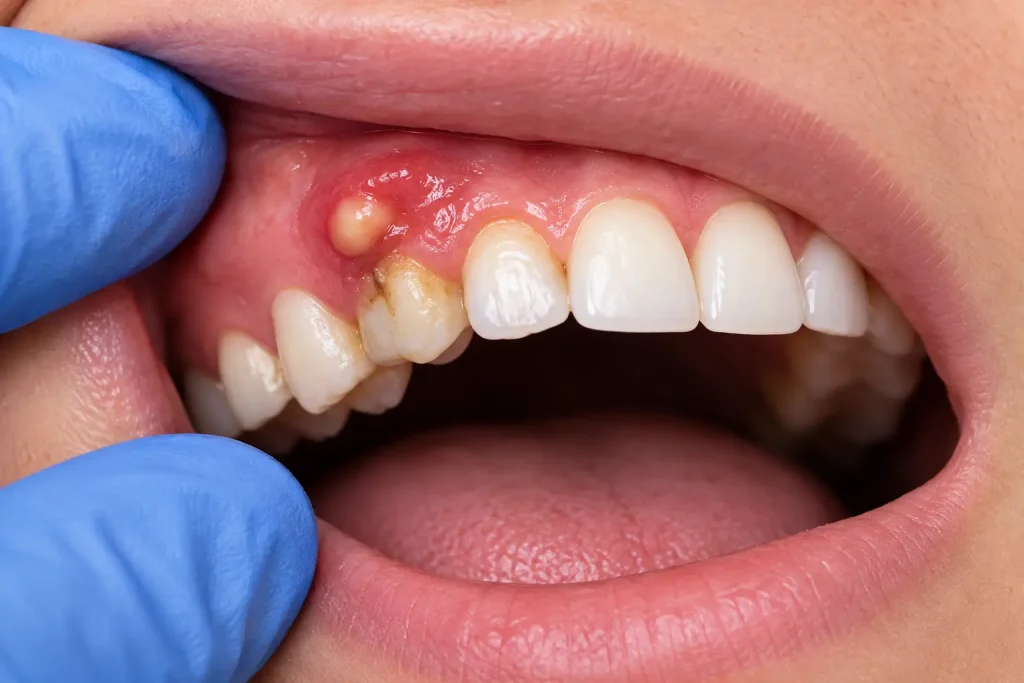
A tooth infection (dental abscess) happens when bacteria get inside the tooth or the gum tissue around it and the body cannot fight it off on its own. The infection creates a pocket of pus, which builds pressure and causes pain.
The symptoms are often different from a straightforward cavity or sensitivity. Here is what to look out for:
Throbbing pain that does not let up. Unlike sensitivity that comes and goes when you eat or drink, an infected tooth tends to produce a constant, throbbing pain. It may radiate into your jaw, ear, or neck on the same side. Painkillers may dull it temporarily, but the pain keeps returning.
Swelling in the face, jaw, or gum. You might notice a visible swelling on the outside of your cheek or along your jawline. Or you might feel a small, tender lump on the gum near the affected tooth. Either way, swelling means the infection is spreading beyond the tooth itself.
A bad taste in your mouth. If the abscess ruptures, you may suddenly get a foul, salty taste as pus drains into your mouth. The pain often eases temporarily when this happens, but the infection has not gone away. It still needs treatment.
Sensitivity to hot and cold that lingers. With a simple cavity, sensitivity usually stops within a few seconds after the trigger is removed. With an infection, the sensitivity hangs around and can intensify, especially with heat. If hot drinks make it significantly worse, that is a warning sign.
Pain when biting or pressing on the tooth. An infected tooth is often tender to pressure. If tapping the tooth or biting down causes a sharp spike in pain, the tissues around the root are likely inflamed or infected.
Feeling generally unwell. A dental infection is still an infection. You may feel tired, run down, or have a mild fever. In more advanced cases, you may have swollen lymph nodes under your jaw or in your neck.
What Causes a Tooth Infection?
A tooth infection does not appear out of nowhere. There is always an entry point for bacteria. The most common causes are:
Untreated decay. A cavity that has been left untreated eats through the outer layers of the tooth (enamel and dentine) and eventually reaches the pulp, the soft tissue inside that contains nerves and blood vessels. Once bacteria reach the pulp, infection follows.
A cracked or chipped tooth. Even a hairline crack can give bacteria a pathway into the inner layers of a tooth. You may not even see the crack, but you feel the consequences.
Gum disease. Advanced gum disease can create deep pockets between the gum and the tooth root, allowing bacteria to reach areas they normally cannot. This can cause a periodontal abscess, which forms in the gum tissue rather than inside the tooth.
A failed or old dental treatment. Old fillings can deteriorate over time. If a gap opens between the filling and the tooth, bacteria can get underneath and cause an infection in a tooth that was already weakened.
Wisdom teeth. Partially erupted wisdom teeth are particularly prone to infection because the gum flap over them traps food and bacteria. This condition, called pericoronitis, is common in patients in their late teens and twenties and can escalate quickly.
What Happens If You Leave a Tooth Infection Untreated?
This is the part people underestimate. A tooth infection does not resolve on its own. It may seem to come and go, with periods where the pain subsides, but the infection is still there, and it is usually getting worse.
The infection spreads to surrounding bone and tissue. An untreated abscess can destroy the bone around the tooth, making the tooth loose and eventually unsaveable. It can also spread to neighbouring teeth.
Facial swelling can become dangerous. In serious cases, a dental infection can cause swelling that spreads towards the throat (Ludwig’s angina) or the floor of the mouth, potentially compromising the airway. This is a medical emergency. If you have swelling that is making it difficult to swallow or breathe, go straight to A&E at the Royal Infirmary of Edinburgh (51 Little France Crescent, EH16 4SA), not a dentist.
The infection can enter the bloodstream. Sepsis from a dental infection is rare but real. It is more likely in people with weakened immune systems, but it can happen to anyone if an infection is left long enough.
The bottom line: a tooth infection is not something you can manage with painkillers and salt water indefinitely. It needs professional treatment to remove the source of the infection.
What a Dentist Will Do for a Tooth Infection
The treatment depends on how far the infection has progressed and whether the tooth can be saved.
Drainage. If there is a visible abscess, the dentist may drain it to relieve the pressure and pain. This provides immediate relief, though the underlying cause still needs to be addressed.
Antibiotics. Antibiotics are often prescribed alongside treatment (not instead of it). They help control the spread of infection, but they cannot eliminate the bacteria inside a dead or dying tooth. This is why antibiotics alone are usually a temporary measure, not a cure.
Root canal treatment. If the tooth can be saved, root canal treatment removes the infected pulp from inside the tooth, cleans and seals the canals, and preserves the outer structure. Despite its reputation, modern root canal treatment is generally no more uncomfortable than getting a filling.
Extraction. If the infection has destroyed too much of the tooth or the surrounding bone, extraction may be the only option. The tooth can later be replaced with an implant, bridge, or denture depending on the location and your preference.
At Night and Day Emergency Dentist Edinburgh, all of these treatments can be started on the same day. The consultation includes an examination and X-rays to diagnose the problem, and the dentist will explain what is needed and the cost before any treatment begins.
Can You Treat a Tooth Infection at Home?
You can manage the symptoms temporarily, but you cannot treat the infection itself at home. Here is what helps while you wait to see a dentist:
Ibuprofen is the best painkiller for dental infections because it reduces both pain and inflammation. Alternate with paracetamol if needed. Avoid aspirin if there is any bleeding.
Warm salt water rinses (half a teaspoon of salt in a glass of warm water) help draw out some of the infection and keep the area clean. Rinse gently several times a day.
Cold compress on the outside of your cheek, 10 minutes on and 10 minutes off, helps with swelling. Do not apply heat, as this can make the infection spread faster.
Avoid triggers. Hot food and drinks tend to make an infected tooth worse. Stick to lukewarm or cool food and chew on the opposite side.
These measures can buy you a day or two. They are not a substitute for getting the infection treated by a dentist.
Night and Day Emergency Dentist Edinburgh
If you think you have a tooth infection, Night and Day Emergency Dentist Edinburgh can see you the same day. The clinic is at 101-103 Saughtonhall Drive, Edinburgh, EH12 5TS, near Murrayfield. An emergency consultation costs £50 for adults and £85 for children, which covers the examination and any X-rays needed to diagnose the problem.
No registration is required. Walk-ins are welcome. The clinic is open 7 days a week and you can book online 24/7 or call 07999 820 365.
The Balgreen tram stop is a 6 to 8 minute walk from the clinic, with direct connections to Haymarket and the city centre. Buses 12, 26, 31, and Airlink 100 stop on Corstorphine Road, around 5 minutes on foot. Free street parking is available right outside.
Patients visit from across Edinburgh, including Murrayfield, Corstorphine, Roseburn, Gorgie, Haymarket, Craigleith, Slateford, Stenhouse, and the city centre.